C-Section Scars & Your Body After Birth
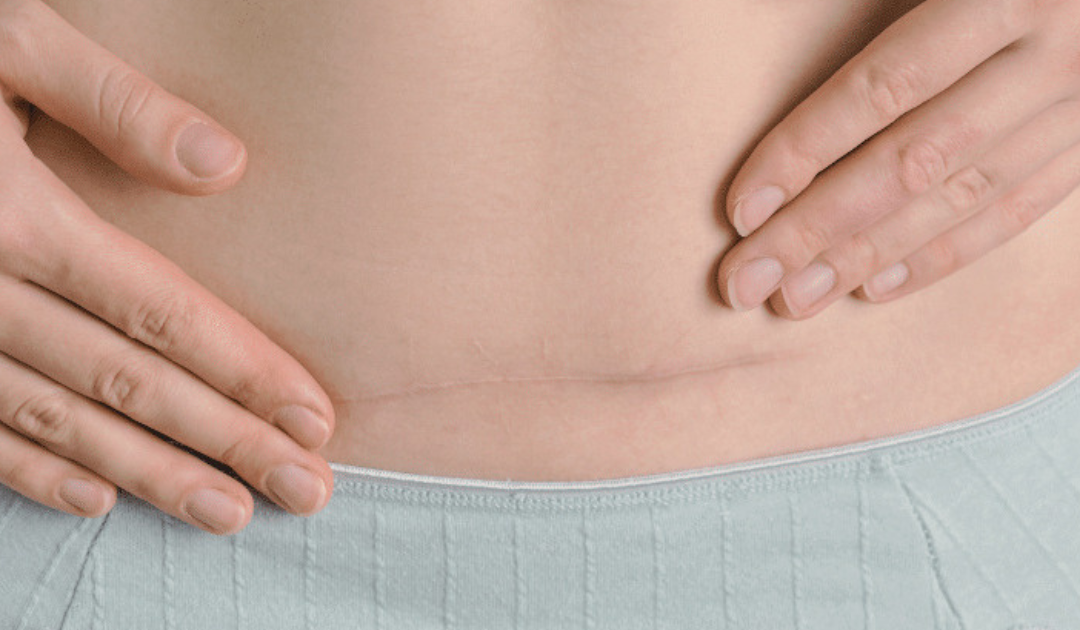
In Canada, C-sections now account for approximately 34% of hospital births – about 1 in every 3 births. A C-section is a major abdominal surgery, and although the incision on the outside may look small, several layers of tissue are involved in the healing process.
During a C-section, the surgeon makes an incision through the skin, fatty tissue, the abdominal fascia, and the linea alba – the strong connective tissue that runs down the middle of your abdominal muscles. The uterus is also opened to deliver the baby. As all of these layers heal, scar tissue naturally forms.
Why can a C-section scar affect more than just the skin?
Scar tissue is the body’s way of repairing an injury. As it heals, however, the tissues around the scar can become tighter and less mobile. Instead of the different layers of tissue sliding smoothly over one another, they may become more “stuck” or restricted.
Your body is connected through a network of tissue called fascia. You can think of fascia as a thin, flexible layer that surrounds and connects your muscles, organs, nerves, and other structures. Healthy fascia allows your tissues to move and glide freely as you breathe, walk, stretch, exercise, and go about your everyday life.
When one area becomes restricted, such as around a C-section scar, your body may naturally find other ways to move and compensate. Over time, this can contribute to tension or discomfort in areas such as the abdomen, hips, pelvis, lower back, or even elsewhere in the body.
How can scar release help?
As an osteopathic manual practitioner, I use gentle hands-on techniques to work with the tissues around your scar. The goal isn’t simply to make the scar look different – it’s to help the layers of tissue move more freely and comfortably.
Scar work may help to:
- Reduce tightness and pulling around the scar and the surrounding pelvis and abdomen.
- Ease tension that may contribute to lower-back pain, pelvic discomfort, or sensitivity around the scar.
- Improve movement between the layers of tissue, helping your skin, fascia, and muscles move more freely.
- Support circulation and lymphatic drainage, which can help reduce feelings of swelling or congestion in the area.
- Improve mobility through the hips, pelvis, and spine when these areas have been compensating for restricted movement.
- Reduce sensitivity and discomfort around the scar.
- Improve the appearance and flexibility of the scar over time.
When can you start?
Your body needs time to heal after birth and surgery. For direct work on a C-section scar, it is generally recommended to wait until around 6 weeks postpartum, once the initial healing has taken place. Everyone heals differently, so your scar should be fully closed and healed before direct treatment begins, and you should follow any recommendations from your healthcare provider.
And C-section scars aren’t the only scars that can benefit from this type of work. Any scar – from surgery, an injury, or even a small cut can sometimes create restrictions in the surrounding tissues.
Scar release is about more than the scar itself. It’s about helping your body regain comfortable movement, flexibility, and freedom after surgery, so you can feel more at ease in your body as you recover.
Book in to see me here.
Our practitioners do not diagnose or practice medicine, nor do we attempt to treat disease. If you are concerned about any medical pathology and/or disease, always consult your physician prior to exploring Acupuncture.